
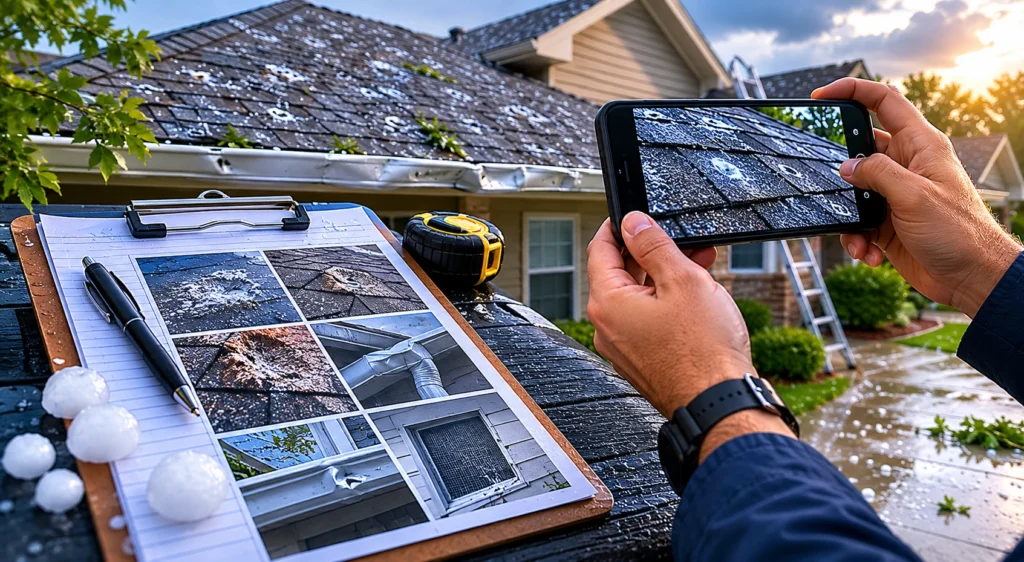
Hailstorms create chaos fast. One afternoon your roof looks perfectly fine. A few minutes later, your shingles may be bruised, your gutters dented, and your insurance claim suddenly becomes one of the most important financial situations you will deal with as a homeowner. That is exactly why understanding How to Document Hail Damage for an Insurance Claim matters so much. Strong documentation can dramatically affect inspections, negotiations, supplements, and final settlement amounts. In areas like Round Rock, severe hail events can leave homeowners scrambling for answers while insurance adjusters handle hundreds of claims simultaneously.
The reality is simple. The homeowners with the best documentation often place themselves in the strongest position during the claim process. Not because they exaggerate damage. Because they can prove it. This guide breaks down exactly how to document hail damage properly, what mistakes homeowners commonly make, how insurance companies evaluate evidence, and why organized claim files can protect you financially long before repairs even begin.
Why Proper Documentation Is Critical for Hail Claims
Insurance claims revolve around evidence. Not assumptions. Not frustration. Not verbal descriptions. Evidence. That evidence starts with documentation. The moment a hailstorm hits, the clock begins working against the homeowner. Water intrusion can worsen. Shingles continue deteriorating. Temporary repairs may hide original impact points. Contractors may unintentionally remove proof during emergency work. Everything changes quickly. Good documentation preserves the condition of the property immediately after the storm.
It creates a timeline. It supports causation. It strengthens negotiations. Most importantly, detailed records help reduce disputes later in the process.
Insurance companies review thousands of claims every year. Adjusters rely heavily on photos, inspection reports, weather data, measurements, invoices, and written observations to determine whether damage is storm-related and covered under the policy. Weak documentation creates room for disagreement. Strong documentation narrows those arguments dramatically.
That becomes especially important during large Texas hailstorms when carriers manage high claim volumes and fast-moving inspections across Round Rock and surrounding communities. Detailed documentation also becomes valuable during complex claim evaluations involving material aging, impact analysis, and even structural assessment concepts similar to fracture mechanics, where small surface damage may eventually contribute to larger structural deterioration over time.
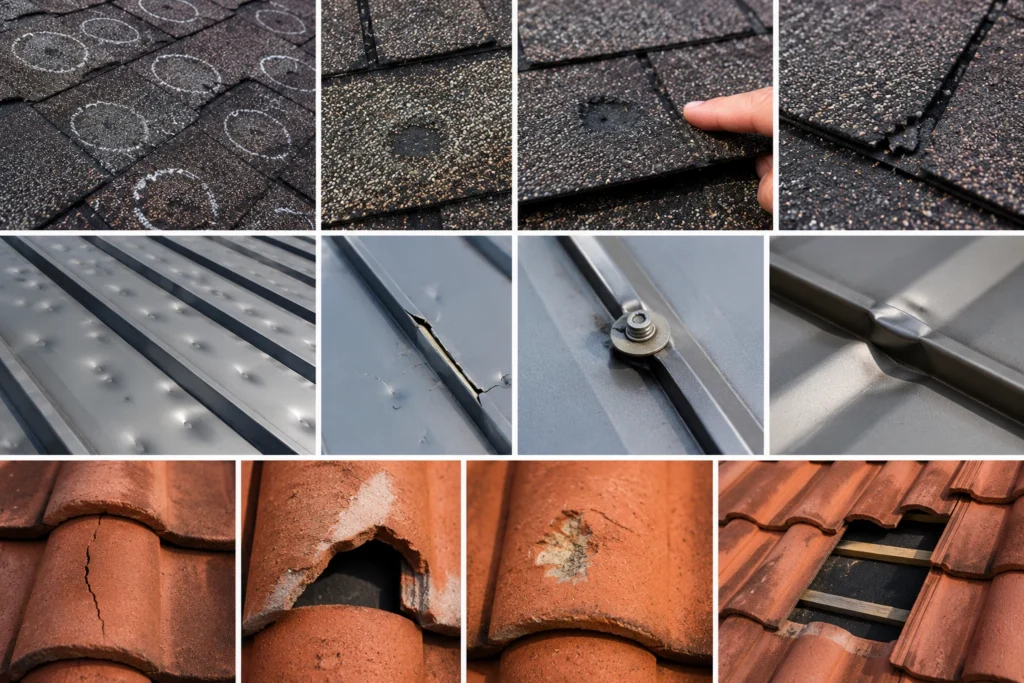
Understanding What Hail Damage Actually Looks Like
Many homeowners expect hail damage to look dramatic. Sometimes it does. Sometimes it does not. That is where problems begin. Not all hail damage is obvious from the ground. Some forms of damage remain hidden until leaks appear months later. Others may shorten roof lifespan without creating immediate interior water intrusion. Understanding what to look for helps homeowners create more accurate claim documentation.
Asphalt Shingle Damage
Asphalt shingles commonly show:
- Granule loss
- Circular bruising
- Soft impact spots
- Fractured matting
- Exposed asphalt layers
- Edge damage
Bruising often feels soft when lightly pressed. Granule loss may expose darker underlying material. Over time, those weakened areas deteriorate faster under Texas heat and UV exposure.
Metal Roof Damage
Metal roofing systems may show:
- Dents
- Paint fractures
- Surface scarring
- Fastener damage
- Panel distortion
Even cosmetic-looking dents sometimes create coating failures that accelerate corrosion later.
Tile Roof Damage
Tile systems can experience:
- Hairline cracking
- Corner breaks
- Surface chips
- Underlayment exposure
Tile roofs frequently require close inspection because some damage remains difficult to see from the ground.
Other Exterior Damage
Roofs are not the only concern.
Hail often damages:
| Exterior Component | Common Damage |
| Gutters | Dents and separation |
| Downspouts | Impact marks |
| Siding | Cracks and punctures |
| Window Screens | Tears and holes |
| Garage Doors | Denting |
| HVAC Units | Bent condenser fins |
Documenting collateral damage helps support the overall storm severity affecting the property. That matters during claim evaluation.
Safety Comes First During Inspections
This part gets overlooked constantly. Homeowners rush onto roofs immediately after storms. Wet shingles, structural damage, loose debris, and unstable ladders create serious hazards. No insurance claim is worth a major injury. If conditions appear dangerous, stay off the roof. Use binoculars initially. Photograph visible exterior impacts safely from the ground. Wait for professional inspections if necessary.
Important safety reminders include:
- Avoid climbing wet roofs
- Watch for fallen power lines
- Wear proper footwear
- Never inspect alone
- Use stable ladders
- Avoid storm inspections at night
Professional roofing inspections often provide safer and more thorough evaluations than rushed homeowner inspections immediately after severe weather.
Document the Storm Immediately
Timing matters enormously. The strongest claim files often begin within hours of the storm itself. The goal is to preserve evidence while conditions remain fresh and visible.
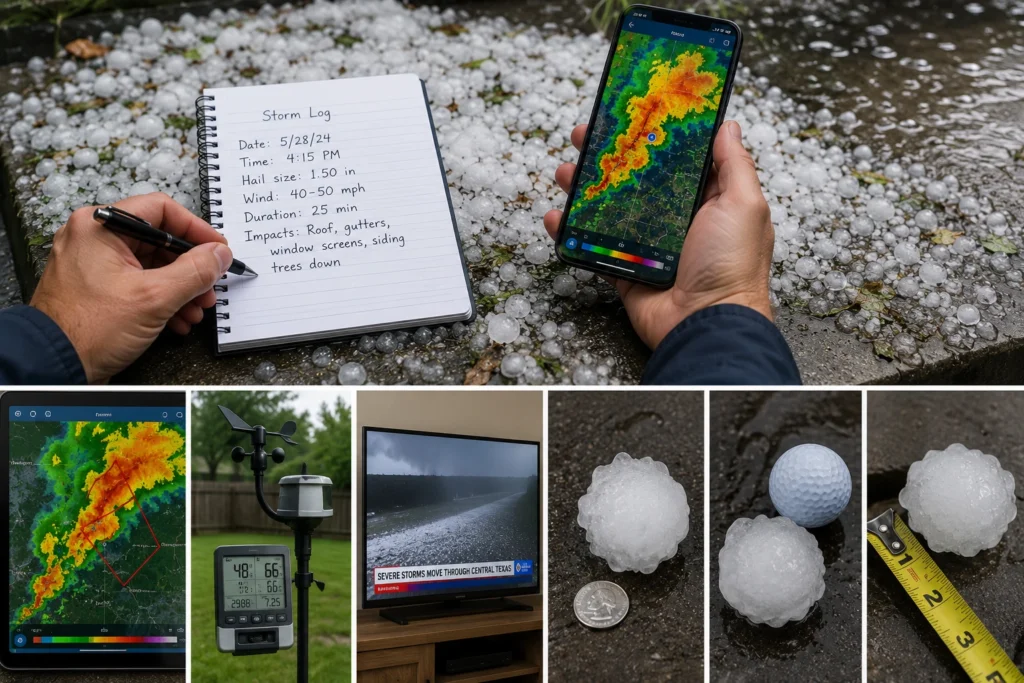
Record Storm Details
Create a basic storm log including:
- Date of storm
- Approximate time
- Hail size
- Wind intensity
- Storm duration
- Visible property impacts
These details create valuable claim timelines later.
Save Weather Reports
Weather verification helps establish storm conditions affecting the property.
Useful sources include:
- NOAA storm reports
- Radar screenshots
- Local weather station data
- News coverage
- Storm tracking apps
You may even save hail maps showing impact zones near Round Rock if available.
Photograph Hailstones
This step is surprisingly valuable. Take photos quickly before hail melts.
Use common objects for scale:
- Coins
- Golf balls
- Tape measures
- Hands
Timestamped hail photos can help demonstrate storm severity later if questions arise about damage causation.
How to Take Effective Damage Photos
Poor photos weaken claims. Blurry images. Bad lighting. Random angles. Incomplete coverage. Insurance companies cannot evaluate what they cannot clearly see. That sounds obvious. Yet it happens constantly. The best claim files use organized photography showing both overall conditions and close-up damage details.
Start With Wide-Angle Photos
Begin with larger overview shots showing:
- Entire roof slopes
- Property elevations
- Fence lines
- Gutters
- Exterior walls
- Yard debris
Wide-angle images establish context. They show the condition of the property overall before zooming into individual impact points.
Take Detailed Close-Up Photos
After overview images, document specific damage areas.
Capture:
- Bruised shingles
- Fractures
- Dents
- Missing granules
- Cracked tiles
- Torn screens
Take multiple angles for each damaged area.
Lighting matters too. Midday sunlight often highlights impacts more clearly.
Best Practices for Claim Photography
Follow these simple rules:
- Use high-resolution settings
- Take more photos than you think you need
- Organize by area
- Avoid shadows when possible
- Photograph serial numbers if equipment is damaged
- Back up photos immediately
Detailed visual evidence often becomes one of the strongest parts of a hail claim file.
Video Documentation Can Strengthen Your Claim
Photos freeze moments. Video adds context. That combination matters. Walkaround videos help show the overall storm impact on the property while also capturing audio explanations describing visible concerns.
Effective video documentation includes:
- Exterior walkarounds
- Interior leak areas
- Ceiling stains
- Water dripping
- Damaged gutters
- HVAC impacts
Narration can help too. Describe what you are seeing naturally while recording.
For example:
“This section above the garage shows visible granule loss after the hailstorm from yesterday evening.”
Simple. Clear. Organized. Avoid emotional commentary. Focus on observable conditions.
Create a Detailed Damage Inventory
Documentation goes beyond photos alone. Create written records too. This is where homeowners often gain significant organization advantages during the claim process.
Exterior Damage Checklist
| Area | Possible Damage |
| Roof | Bruising, fractures |
| Flashing | Separation |
| Gutters | Dents |
| Windows | Cracks |
| Siding | Chips |
| Paint | Impact marks |
Interior Damage Checklist
Do not forget interior conditions.
Look for:
- Ceiling stains
- Wet insulation
- Attic moisture
- Peeling paint
- Mold concerns
- Window leaks
Interior damage sometimes appears days later. Continue monitoring the property after storms.
Personal Property Documentation
Storms may damage more than the structure itself.
Document affected:
- Patio furniture
- Outdoor grills
- Vehicles
- Electronics
- Lawn equipment
Photograph everything before disposal whenever possible.
Organize Your Claim File Properly
This part separates organized claims from chaotic ones. Strong organization saves enormous stress later.
Insurance claims generate massive amounts of paperwork quickly:
- Emails
- Estimates
- Photos
- Invoices
- Inspection reports
- Claim numbers
- Repair receipts
Without organization, important details get lost.
Documents You Should Keep
Your claim file should include:
- Insurance policy
- Claim correspondence
- Contractor estimates
- Inspection reports
- Temporary repair receipts
- Weather reports
- Communication logs
Keep everything.
Even small details matter later during disputes or supplements.
Maintain a Communication Log
This is incredibly important.
Track every interaction including:
| Date | Person | Discussion |
| May 4 | Insurance adjuster | Scheduled inspection |
| May 6 | Roofing contractor | Completed inspection |
| May 8 | Carrier representative | Requested additional photos |
Simple logs prevent confusion later.
Digital Organization Matters
Create cloud backups immediately.
Use organized folders labeled:
- Roof photos
- Interior damage
- Estimates
- Carrier emails
- Weather reports
Good organization speeds up responses when adjusters request additional information.
Common Documentation Mistakes Homeowners Make
Some mistakes repeatedly weaken otherwise legitimate claims.
Avoid them.
Waiting Too Long
Time damages evidence. Fast inspections preserve stronger proof.
Taking Too Few Photos
One or two images rarely tell the full story. Document thoroughly.
Throwing Away Damaged Materials
Never discard damaged components before documentation.
That includes:
- Shingles
- Flashing
- Gutters
- Interior materials
Missing Interior Damage
Many homeowners focus only on roofs. Leaks inside the home matter too.
Failing to Document Temporary Repairs
Temporary tarping and emergency mitigation should also be photographed and documented carefully.
How Insurance Adjusters Evaluate Hail Damage Evidence
Understanding the adjuster’s perspective helps homeowners build better claim files.
Adjusters evaluate:
- Storm timing
- Damage consistency
- Material conditions
- Impact patterns
- Weather data
- Repair feasibility
They look for evidence connecting damage directly to the reported storm event. Consistency matters enormously. For example, random isolated roof damage without corresponding collateral impacts may raise questions about causation. On the other hand, widespread collateral impacts across gutters, screens, soft metals, and roofing materials often support storm-related conclusions more effectively. That is why comprehensive documentation matters so much.
Professional Inspections Often Strengthen Claims
Homeowners can document significant evidence independently. Still, professional inspections often uncover additional damage missed initially.
Roofing Contractor Inspections
Professional roofers may provide:
- Test squares
- Drone imaging
- Moisture detection
- Detailed measurements
- Material analysis
These inspections frequently reveal hidden damage invisible from the ground.
Public Adjuster Documentation
Public adjusters often create highly detailed claim files including:
- Line-item estimates
- Damage inventories
- Photo reports
- Policy analysis
- Supplemental documentation
Their role focuses on documenting covered damages thoroughly and supporting negotiations with the insurance carrier.
Why Pre-Hire Research Matters
Homeowners researching How to Document Hail Damage for an Insurance Claim are often trying to understand the process before deciding whether outside help becomes necessary. That is smart. Understanding documentation standards early helps homeowners ask better questions and avoid rushed decisions after major storms.
Many homeowners searching for “Hail Damage Roof Insurance Claim: How to Protect Your Roof” are trying to understand the claims process before speaking with contractors, roofers, or public adjusters, and that early research often leads to stronger documentation decisions after severe storms. Local experience also matters. Contractors and public adjusters familiar with Round Rock hail claims often understand regional weather patterns, local repair pricing, and common carrier disputes affecting Texas storm losses.
What If Your Claim Is Underpaid or Denied?
This happens more often than many homeowners expect. Sometimes damage gets overlooked. Sometimes estimates miss necessary repairs. Sometimes disputes arise regarding causation or repair scope. Documentation becomes even more important during these situations.
Options may include:
- Re-inspections
- Supplemental claims
- Independent contractor reports
- Engineering evaluations
- Appraisal processes
Additional evidence frequently changes claim outcomes. Especially when hidden damage surfaces during repairs.
Texas Timing Deadlines Matter
Do not delay. Many insurance policies contain reporting deadlines and claim requirements that affect coverage rights.
Fast documentation preserves stronger evidence while reducing opportunities for disputes regarding:
- Wear and tear
- Deferred maintenance
- Pre-existing conditions
- Delayed reporting
Prompt inspections also help identify emergency mitigation needs before secondary water damage develops.
Technology Is Changing Hail Documentation
Modern claim documentation has improved dramatically. Technology now allows homeowners and professionals to create highly detailed digital claim files quickly.
Helpful tools include:
Drone Photography
Provides aerial roof views safely.
Moisture Detection Equipment
Identifies hidden water intrusion.
Roofing Measurement Software
Improves repair calculations.
Mobile Claim Apps
Organizes photos and notes efficiently.
Cloud Storage Platforms
Protects documentation from loss. Better technology creates stronger claim records. Simple as that.
Why Organized Documentation Often Leads to Better Outcomes
Insurance claims become easier to evaluate when evidence is organized clearly. That benefits everyone involved.
Strong documentation may help:
- Reduce delays
- Support supplements
- Clarify disputes
- Improve estimate accuracy
- Strengthen negotiations
Most importantly, organized claim files help ensure legitimate storm-related damages receive proper attention during the adjustment process. That matters financially. Especially after major hailstorms.
Final Thoughts
Learning How to Document Hail Damage for an Insurance Claim is not about exaggerating damage or creating conflict with insurance companies. It is about accuracy. It is about preserving evidence. It is about protecting your financial interests after severe storms affect your property. The homeowners who document carefully often place themselves in stronger positions throughout inspections, negotiations, supplements, and repairs.
That preparation matters. Especially in hail-prone areas like Round Rock where severe weather can create substantial property damage in a matter of minutes. Take photos early. Stay organized. Save records. Document everything thoroughly. And most importantly, do not underestimate small details. Those small details often become the difference between incomplete claims and properly documented losses in Round Rock hail damage cases.
FAQs
You should document hail damage as soon as it is safe to do so because weather exposure can quickly change or hide evidence.
Yes. Many hail-damaged roofs do not leak immediately, but hidden damage can shorten roof lifespan over time.
Take wide-angle photos of the property and close-up images of dents, bruising, granule loss, and damaged exterior components.
Yes. Keeping damaged shingles, flashing, or gutters can help support your insurance claim during inspections or disputes.
Incomplete or weak documentation may create disputes about the cause, severity, or timing of the damage.
Yes. Video helps show the overall property condition and can provide additional context beyond still photos.
Keep inspection reports, estimates, receipts, emails, weather reports, and all claim-related communication.
Professional inspections often uncover hidden damage that homeowners may miss during ground-level inspections.
You may need supplemental documentation and additional inspections to support further claim adjustments.
Organized claim files help reduce delays, strengthen negotiations, and make it easier to respond to insurance requests.