
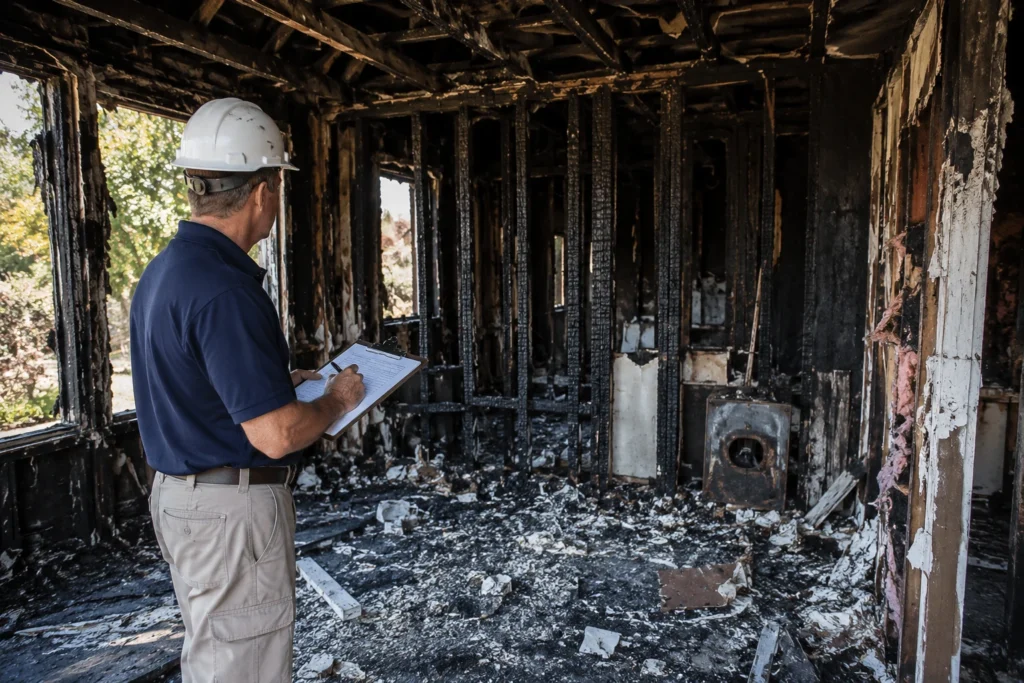
A fire changes everything fast. One moment life feels normal. The next moment, smoke fills the air, emergency crews arrive, and homeowners suddenly face one of the most stressful insurance situations imaginable. In those moments, understanding what a fire insurance adjuster actually does becomes incredibly important. Most people only deal with a major insurance claim once or twice in their lives. That lack of experience creates problems. Big ones. Fire claims involve structural damage, smoke contamination, water damage from firefighting efforts, temporary housing expenses, and long inventories of destroyed personal belongings. It becomes overwhelming quickly.
That is why many property owners seek help from a fire insurance adjuster after significant losses. The process is not just about repairing a building. It is about protecting financial recovery while navigating complicated insurance procedures that most homeowners were never taught to handle. In Round Rock, fire losses can create massive rebuilding challenges due to rising labor costs, material pricing fluctuations, and extensive restoration requirements. One mistake during the claims process can affect settlement outcomes for months. And unfortunately, mistakes happen all the time.
What Is a Fire Insurance Adjuster?
A fire insurance adjuster evaluates fire-related insurance claims. Sounds simple. It is not. The role includes inspecting damage, reviewing policy coverage, estimating repair costs, documenting losses, and negotiating claim values. But different adjusters represent different interests, and that distinction matters enormously.
There are generally three types of adjusters involved in fire claims:
| Adjuster Type | Who They Represent | Primary Goal |
| Staff Adjuster | Insurance company | Evaluate claims for carrier |
| Independent Adjuster | Insurance company contractor | Handle claims on behalf of insurer |
| Public Adjuster | Policyholder | Advocate for insured property owner |
This difference changes everything. Insurance company adjusters work for the carrier. Public adjusters work for the homeowner or business owner. That impacts inspections, documentation priorities, and negotiation strategies throughout the claim.
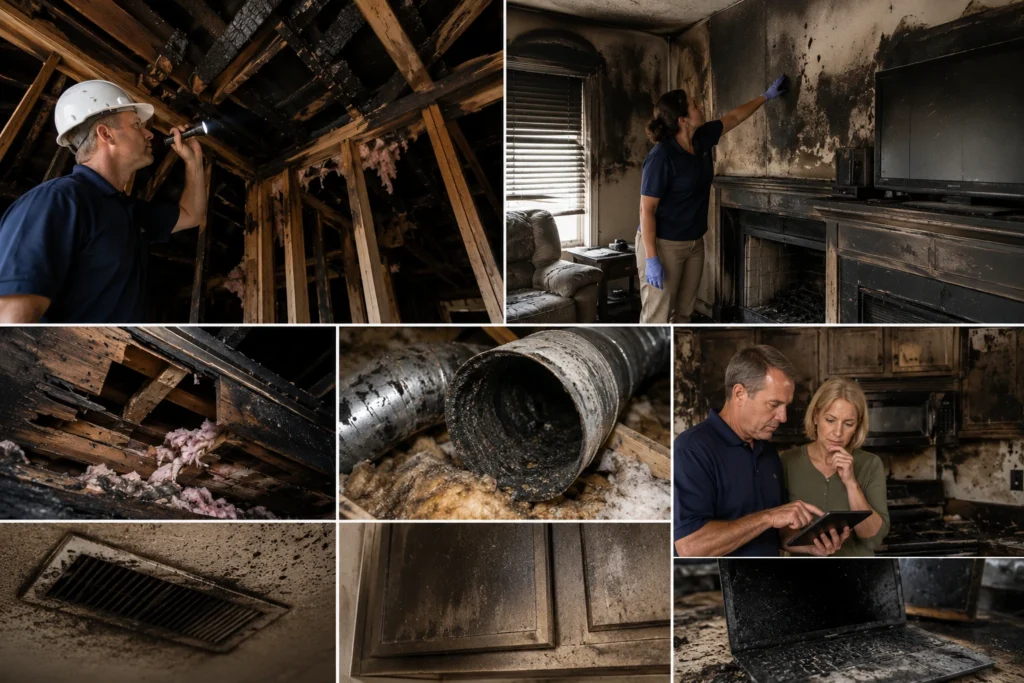
A qualified fire insurance adjuster may help identify damages that initially appear minor but later become major repair expenses. Smoke contamination inside insulation, hidden moisture behind walls, or HVAC contamination often falls into this category. Fire claims rarely involve only visible burn damage. That is where many disputes begin.
Why Fire Insurance Claims Become So Complicated
A fire loss is rarely clean and straightforward. The damage spreads far beyond the flames themselves. Smoke enters vents. Water saturates flooring. Soot contaminates electronics. Structural components weaken. Odors penetrate insulation and fabrics. Even areas untouched by direct flames may require extensive restoration work.
This creates layered damage categories that often include:
- Structural fire damage
- Smoke contamination
- Soot residue
- Water damage
- Mold risks
- Electrical hazards
- HVAC contamination
- Personal property destruction
- Temporary living expenses
Now add emotional stress to that situation. Homeowners are exhausted. Families are displaced. Important documents may be gone. Daily routines disappear overnight. During that chaos, people are expected to inventory every damaged possession they owned. That is difficult under normal circumstances.
After a fire? It becomes brutal. Some homeowners rush through the process simply because they want closure. Others accept low settlements because they are emotionally drained and financially pressured. Insurance companies know fire claims move under emotional pressure. That pressure often affects decision-making.
The Difference Between Public Adjusters and Insurance Adjusters
This confusion causes problems constantly. Many homeowners assume the adjuster assigned by the insurance company is automatically looking out for their interests. That assumption is dangerous. Insurance company adjusters evaluate claims for the carrier. Their job involves assessing covered damages under policy guidelines while controlling claim costs.
Public adjusters work for policyholders instead. That changes the entire relationship. A public adjuster may independently document damages, prepare estimates, review policy language, negotiate supplements, and challenge incomplete scopes of repair.
The distinction matters most when disagreements arise over:
- Repair scope
- Smoke contamination
- Structural integrity
- Replacement pricing
- Personal property valuation
- Additional living expenses
- Code upgrade requirements
For example, one estimate may include complete insulation replacement due to smoke contamination while another may propose only partial cleaning. That difference could represent thousands of dollars. Sometimes far more.
Common Fire Claim Problems Homeowners Face
Fire insurance claims contain more disputes than most people realize. And many issues are not obvious initially.
Incomplete Structural Estimates
Some inspections focus primarily on visible fire damage while hidden structural concerns remain under-evaluated.
This may include:
- Damaged roof decking
- Heat-compromised framing
- Moisture intrusion
- Weakened supports
- Electrical hazards
These hidden issues frequently surface later during reconstruction. At that point, supplemental claims become necessary.
Smoke Damage Disagreements
Smoke spreads aggressively. Even small fires can contaminate areas far beyond the original burn zone. Odor penetration inside drywall, insulation, ductwork, and fabrics becomes a major restoration concern.
Disputes often arise regarding:
| Smoke Damage Issue | Common Disagreement |
| HVAC systems | Cleaning vs replacement |
| Insulation | Spot treatment vs full replacement |
| Cabinets | Refinish vs replace |
| Electronics | Surface cleaning vs contamination damage |
| Clothing and furniture | Restoration feasibility |
Smoke damage becomes especially complicated because contamination is not always visible. But invisible damage still matters.
Personal Property Inventory Problems
This part overwhelms many homeowners. Imagine trying to remember every item you owned while displaced from your home. Now imagine documenting prices, brands, purchase dates, and replacement values for hundreds of items.
Fire claims often require detailed inventories covering:
- Furniture
- Appliances
- Electronics
- Clothing
- Jewelry
- Kitchen items
- Tools
- Decor
- Business equipment
Missing documentation weakens claims. Disorganization slows recovery.
How a Fire Insurance Adjuster Evaluates Damage
A professional fire insurance adjuster typically approaches claims systematically. Not emotionally. That matters because organized documentation strengthens negotiations.
Initial Inspection
The first inspection often includes:
- Photo documentation
- Moisture readings
- Structural observations
- Smoke contamination analysis
- Safety evaluations
- Roof inspections
- Electrical assessments
Extensive notes become critical later. Especially during disputes.
Policy Review
Insurance policies contain multiple coverage sections that affect settlement outcomes. A detailed review may include:
| Coverage Type | What It Covers |
| Dwelling Coverage | Structural repairs |
| Personal Property | Belongings and contents |
| ALE Coverage | Temporary housing expenses |
| Ordinance & Law | Code-required upgrades |
| Other Structures | Detached garages or sheds |
Coverage interpretation becomes especially important during large losses. Some homeowners discover too late that certain policy limits significantly affect rebuilding options.
Detailed Estimating
Most large fire claims involve estimating software such as Xactimate.
Line-item estimates may include:
- Demolition
- Framing
- Roofing
- Drywall
- Flooring
- Electrical work
- Painting
- Insulation
- HVAC replacement
- Debris removal
Accuracy matters tremendously. Small omissions across dozens of categories add up quickly. In larger fire investigations, some restoration specialists and engineers may rely on advanced material analysis methods similar to principles studied in spectroscopy when evaluating smoke residue, chemical contamination, and heat-related material deterioration throughout damaged structures.
Fire Damage Often Includes Hidden Problems
Visible flames attract attention. Hidden damage creates long-term headaches. Smoke contamination inside HVAC systems becomes a common example. Even after visible repairs are completed, lingering smoke particles can continue circulating throughout the property. That creates health concerns and odor problems later. Water damage becomes another major secondary issue.
Firefighting efforts often saturate:
- Flooring systems
- Ceiling cavities
- Wall assemblies
- Insulation
- Subfloors
If moisture remains trapped, mold growth risks increase dramatically. Some homeowners focus only on rebuilding visible areas while hidden moisture slowly damages the structure underneath. That mistake becomes expensive later. Very expensive.
What Homeowners Should Do Immediately After a Fire
The first several days after a fire matter enormously. Decisions made during this period can influence claim outcomes for months.
Prioritize Safety
Never re-enter a damaged structure until officials confirm it is safe. Structural instability, electrical hazards, and toxic contaminants may remain present long after the fire is extinguished.
Document Everything
Documentation becomes your strongest leverage later.
Take photos immediately.
Capture:
- Exterior damage
- Interior damage
- Smoke staining
- Water intrusion
- Damaged contents
- Structural concerns
The more evidence preserved early, the stronger the claim file becomes.
Save Every Receipt
Temporary expenses add up quickly after a fire.
Keep records for:
- Hotels
- Meals
- Clothing
- Cleaning supplies
- Temporary rentals
- Pet boarding
- Transportation
Additional living expense claims depend heavily on organized receipts.
Avoid Throwing Away Damaged Items
This mistake happens constantly. Homeowners begin cleanup too early and unknowingly remove critical evidence before inspections occur. Preserve damaged items whenever possible until the claims process progresses further.
Signs a Fire Insurance Claim May Be Underpaid
Not every settlement reflects the true scope of damage. There are warning signs homeowners should recognize early.
Low Initial Settlement Offers
Quick offers sometimes appear attractive during stressful situations. But fast settlements may occur before complete inspections are finalized. That creates risk. Especially when hidden smoke contamination or structural issues remain undiscovered.
Missing Repair Items
Compare contractor estimates carefully against insurance estimates.
Missing items frequently include:
- Insulation replacement
- Code upgrades
- Detach-and-reset labor
- HVAC cleaning
- Debris disposal
- Temporary protection
- Specialty finishes
Even modest omissions create major financial gaps.
Large Estimate Differences
When contractor estimates differ dramatically from insurance estimates, further investigation becomes necessary.
The issue may involve:
- Labor pricing
- Material quality
- Scope omissions
- Hidden damage
- Market conditions
Significant estimate gaps should never be ignored casually.
The Fire Insurance Claim Process Explained
Many homeowners feel lost because they do not understand how claims progress. The process generally follows several major phases.
Emergency Mitigation
Immediately after the loss, emergency stabilization begins.
This may include:
- Board-up services
- Roof tarping
- Water extraction
- Debris removal
- Temporary fencing
Fast mitigation helps prevent additional damage.
Claim Reporting
The claim gets assigned to an adjuster after notification. Initial inspections are scheduled. Documentation requests begin quickly.
Inspection and Scope Development
This stage often determines claim direction.
Inspections may involve:
- Carrier adjusters
- Contractors
- Engineers
- Hygienists
- Restoration specialists
Detailed documentation becomes essential here.
Negotiation Phase
Disputes frequently arise during this stage.
Common disagreements include:
- Scope completeness
- Pricing
- Smoke contamination
- Code requirements
- Reconstruction methods
Supporting documentation carries enormous influence during negotiations.
Reconstruction
Once settlements progress, rebuilding begins.
This phase often involves:
- Permit approvals
- Contractor scheduling
- Material ordering
- Inspections
- Supplemental adjustments
Larger fire losses may take many months to fully resolve.
Why Documentation Wins Fire Claims
Strong documentation changes everything. Emotion alone rarely influences claim outcomes effectively. Evidence does.
Professional documentation may include:
- High-resolution photos
- Moisture reports
- Smoke contamination reports
- Contractor estimates
- Engineering evaluations
- Inventory spreadsheets
- Communication records
The stronger the documentation package becomes, the harder it is to minimize legitimate damages. Organization also matters tremendously. One folder with labeled categories often becomes more effective than hundreds of scattered photos across multiple phones and emails. Simple systems create powerful advantages.
Many policyholders who previously worked with a Hurricane Public Adjuster after severe storm damage already understand how complicated large insurance claims can become. Fire losses create similar challenges, especially when structural damage, hidden contamination, and extensive documentation requirements begin affecting settlement negotiations.
Questions To Ask Before Hiring a Fire Insurance Adjuster
Not all adjusters approach claims equally. Homeowners should ask direct questions before signing agreements.
Are You Licensed in Texas?
Licensing matters. Always verify credentials through the Texas Department of Insurance.
How Are Fees Structured?
Most public adjusters work on contingency percentages. Understand exactly how fees apply before signing contracts.
What Type of Fire Claims Do You Handle Most?
Experience matters. Residential and commercial fire claims involve very different complexities.
Who Handles Communication?
Some firms delegate communication heavily after contracts are signed. Clarify who manages negotiations, inspections, and updates throughout the claim.
How Do You Document Claims?
Strong documentation systems often separate experienced professionals from weaker operators. Ask detailed questions.
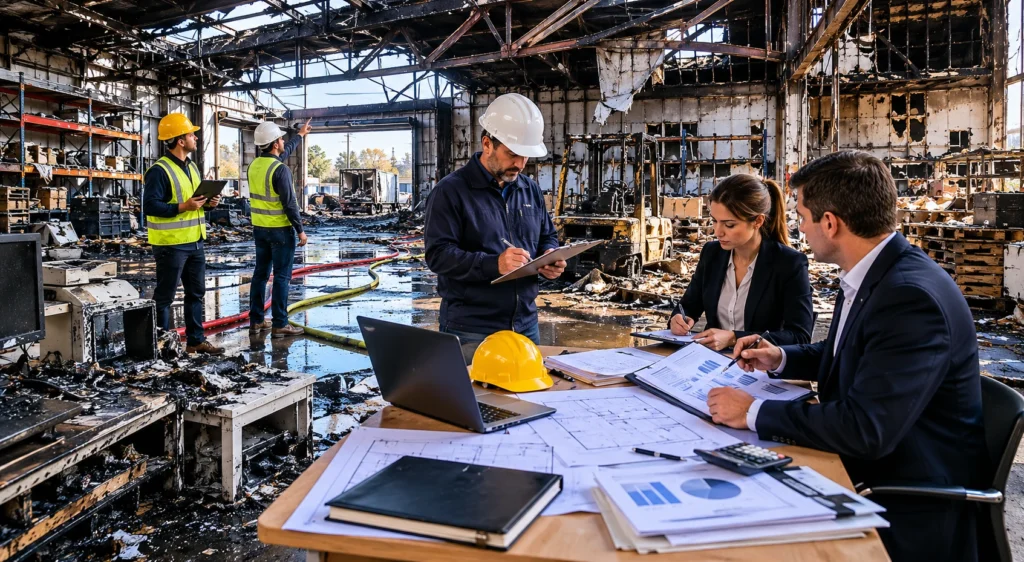
Commercial Fire Claims Become Even More Complex
Commercial losses create another level of difficulty entirely.
Business owners may face:
- Inventory destruction
- Equipment damage
- Lost revenue
- Operational shutdowns
- Employee disruption
- Supply chain interruptions
Business interruption coverage becomes a major component of these claims.
Calculating lost income requires extensive documentation involving:
- Financial records
- Revenue trends
- Payroll expenses
- Operating costs
- Tax documentation
One overlooked coverage issue can affect an entire business recovery timeline. That is why commercial claims often involve accountants, engineers, consultants, and restoration specialists working together simultaneously.
Mistakes That Hurt Fire Insurance Claims
Some claim problems are preventable. Completely preventable.
Accepting the First Offer Too Quickly
Initial offers may not reflect complete damages. Patience matters. Thorough inspections matter more.
Failing To Inventory Contents Properly
Incomplete content inventories weaken settlements dramatically. Take time to document everything possible.
Missing Communication Records
Always keep written records. Always.
Emails create accountability and preserve timelines during disputes.
Beginning Repairs Too Early
Emergency mitigation differs from permanent reconstruction. Permanent repairs before full documentation may create evidentiary problems later.
Throwing Away Damaged Materials
Preserve evidence whenever possible. Especially during disputed claims.
How Fire Insurance Adjusters Help Maximize Settlements
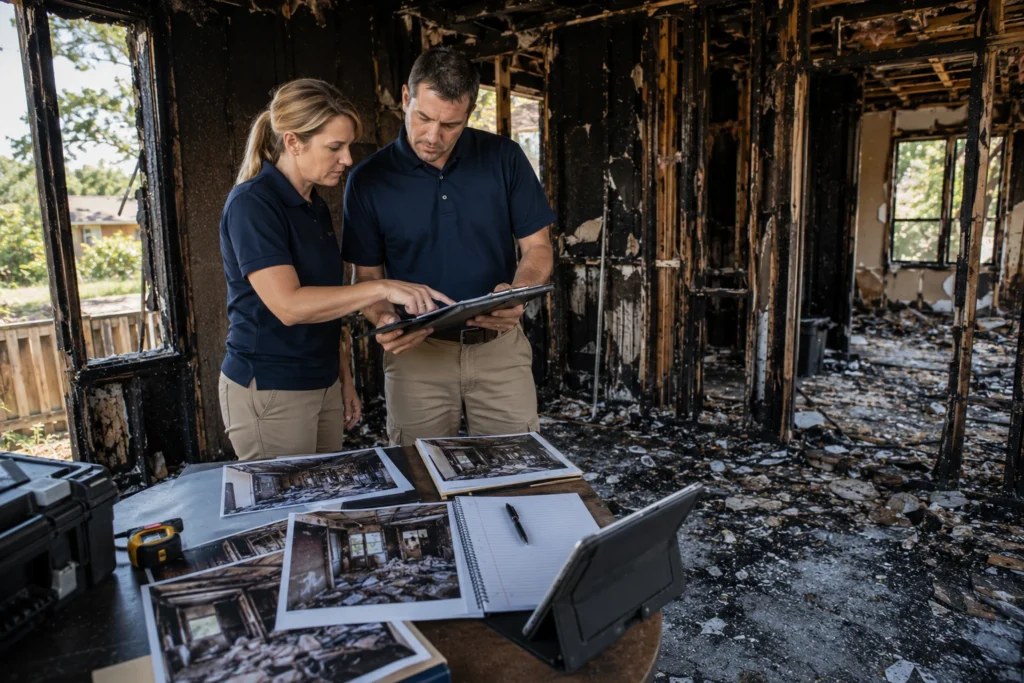
The goal is not exaggeration. The goal is accuracy.
A qualified fire insurance adjuster may help policyholders by:
- Identifying hidden damage
- Reviewing policy coverage
- Preparing detailed estimates
- Coordinating inspections
- Documenting losses thoroughly
- Negotiating disputed items
- Managing supplemental claims
Large losses involve enormous amounts of information. Organization and expertise help prevent critical details from being overlooked. That becomes especially important during severe fire losses involving structural rebuilding, code upgrades, and extensive smoke contamination.
Why Local Experience Matters
Local knowledge influences claims more than many homeowners realize. Contractor pricing varies by region. Permit requirements vary too. Building code enforcement differs across municipalities. Labor availability fluctuates. Material costs change constantly.
An adjuster familiar with Round Rock understands local rebuilding conditions, contractor pricing realities, and regional restoration challenges that may affect claim valuations. That familiarity helps create more accurate repair estimates. It also improves communication with local contractors and restoration teams during reconstruction.
Choosing the Right Fire Insurance Adjuster
Choosing representation during a major fire claim is an important decision. Look beyond advertisements. Look beyond promises.
Evaluate:
| What To Review | Why It Matters |
| Licensing | Verifies legal authorization |
| Experience | Large losses require expertise |
| Communication | Delays create frustration |
| Documentation methods | Strong evidence strengthens claims |
| Reviews and reputation | Reveals consistency |
Avoid anyone guaranteeing unrealistic outcomes. No ethical adjuster can promise exact settlement numbers before inspections and policy reviews occur. Professionalism matters. Transparency matters more.
Final Thoughts
A fire loss disrupts nearly every part of life. The emotional stress alone becomes exhausting. Then comes the insurance process. Inspections. Estimates. Inventories. Contractors. Temporary housing. Financial uncertainty. It becomes overwhelming fast. That is why understanding the role of a fire insurance adjuster matters so much after a major property loss. Proper documentation, accurate estimating, organized communication, and strong policy interpretation can significantly affect how a claim unfolds.
In Round Rock, homeowners facing fire damage should approach the claims process carefully and methodically. Fast decisions made under pressure often create long-term financial consequences. Take time to document thoroughly. Ask questions. Review estimates carefully. And most importantly, understand that fire claims involve far more than visible flames alone. The strongest claims are built on evidence, preparation, and accurate evaluation from the very beginning.
FAQs
A fire insurance adjuster evaluates fire-related damages, reviews insurance coverage, and helps determine the value of a claim.
A public adjuster may help document losses, negotiate disputes, and manage complicated fire insurance claims on behalf of homeowners.
Smaller claims may resolve within weeks, while major structural fire losses can take several months or longer.
Many homeowners insurance policies cover smoke damage if it results from a covered fire loss.
Prioritize safety first, document all damages, save receipts, and avoid discarding damaged items before inspections occur.
Claims may be delayed due to large losses, incomplete documentation, inspection disputes, or contractor estimate disagreements.
Estimates may include structural repairs, smoke remediation, water damage restoration, debris removal, and temporary protection costs.
Yes. Smoke contamination, moisture intrusion, and structural weakening may create additional repair costs later.
Many policies include Additional Living Expense coverage for hotels, meals, and temporary housing during repairs.
Large estimate differences, missing repair items, and incomplete smoke damage evaluations may indicate underpayment concerns.