
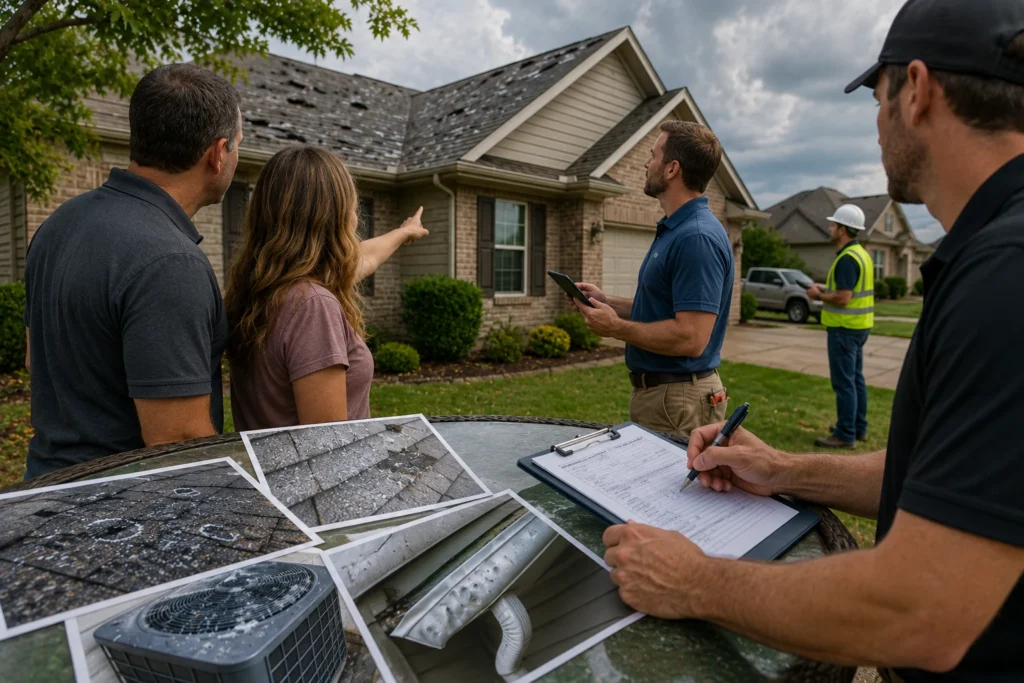
Hailstorms are a reality for many Texas homeowners. One day the weather is calm. The next, hailstones are pounding roofs, denting gutters, damaging HVAC equipment, and leaving property owners scrambling to assess the damage. When that happens, the insurance claim process begins. And that’s where many homeowners encounter a question they never expected to ask: Public Adjuster vs. Insurance Adjuster for Hail Claims in Round Rock, TX what’s the difference, and which one is looking out for my interests?
The answer matters. The professional evaluating your hail claim can significantly influence how damage is documented, how repairs are estimated, and how the claim progresses. While both public adjusters and insurance adjusters play important roles, they serve very different purposes. Many property owners assume everyone involved in the process is working toward the same goal. In reality, each party has distinct responsibilities. Understanding those responsibilities can help you make informed decisions after a hailstorm and potentially avoid costly mistakes. If your home has suffered hail damage in Round Rock, knowing who represents whom may be just as important as understanding the damage itself. Let’s dive in.
Understanding Hail Damage Claims in Texas
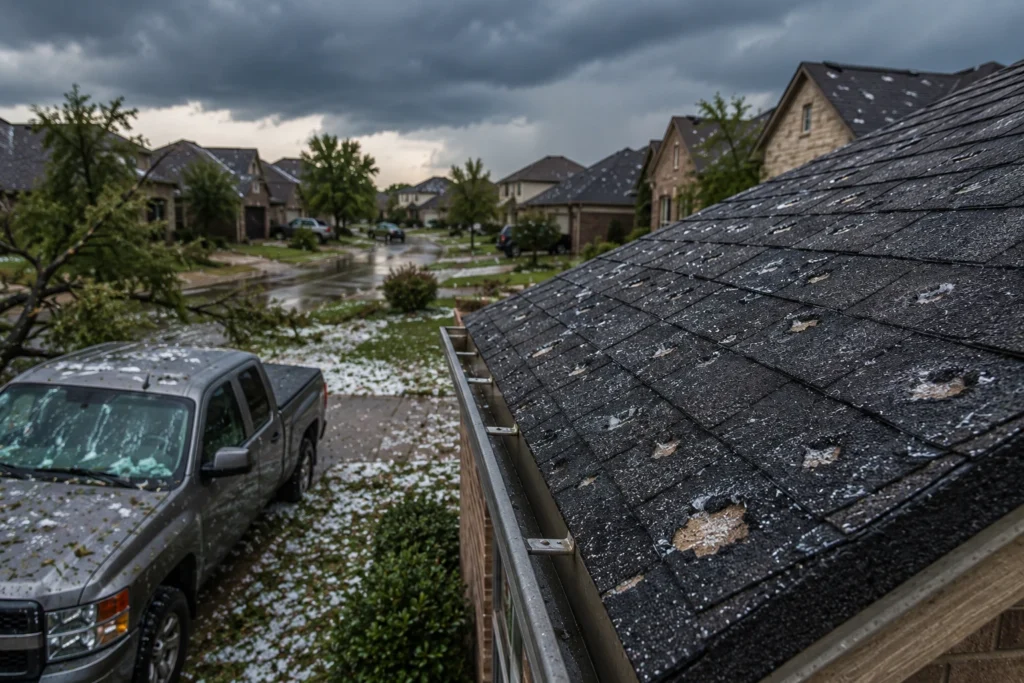
Hail claims are rarely as simple as they appear. A broken window is obvious. A collapsed fence is easy to see. Hail damage, however, often hides beneath the surface. Some impacts are visible immediately. Others remain undetected until roofing materials are removed or a detailed inspection is performed. Because of this, hail claims frequently involve disagreements about the extent of damage and the cost of repairs. Texas consistently experiences some of the highest hail claim volumes in the country. Severe storms can affect thousands of properties in a matter of hours, creating a surge of claims for insurance carriers and contractors alike.
Common hail-related damage includes:
- Asphalt shingle impacts
- Metal roof dents
- Ridge cap damage
- Flashing damage
- Gutter dents
- Downspout impacts
- Window screen damage
- Siding damage
- HVAC condenser damage
- Interior water intrusion
The challenge is that not every damaged component is immediately visible. A roof may appear fine from the ground while significant damage exists across multiple slopes. Likewise, an HVAC unit may continue functioning despite sustaining hail impacts that affect long-term performance. This is why thorough inspections are so important. The quality of the inspection often influences the quality of the claim.
Why Round Rock Homeowners Face Unique Challenges
Round Rock is no stranger to severe weather. Central Texas regularly experiences hailstorms capable of causing substantial property damage. As the area continues to grow, more homes, businesses, and roofing systems are exposed to these weather events. After a major storm, insurance companies often receive a massive influx of claims.
That creates pressure. When hundreds or thousands of inspections must be completed within a short period, adjusters may be managing unusually large workloads. While professionals strive to perform accurate inspections, high claim volumes can create situations where certain damage is overlooked or not fully documented. Several factors contribute to claim complexity in Round Rock:
Aging Roof Systems
Many homes have roofing systems that are already years old when a hailstorm occurs. This can create debates regarding what damage resulted from the storm and what damage may have existed beforehand.
Rising Construction Costs
Roofing materials, labor costs, and building supplies have increased significantly over the past several years. Accurate pricing has become more important than ever.
Multiple Storm Events
Some properties experience more than one severe weather event over time. This can complicate investigations and damage assessments.
Hidden Damage
Not all hail damage is visible during a quick inspection. Roofing components beneath the surface may reveal problems only after repair work begins. These challenges help explain why discussions about Public Adjuster vs. Insurance Adjuster for Hail Claims in Round Rock, TX are becoming increasingly common among homeowners.
What Is an Insurance Adjuster?
An insurance adjuster is the professional assigned by an insurance company to evaluate a claim.
Their responsibilities include:
- Inspecting the property
- Assessing damage
- Reviewing policy coverage
- Estimating repair costs
- Determining claim value
- Recommending settlement amounts
Insurance adjusters play a critical role in the claims process. Without an evaluation, insurance companies would have no reliable way to determine the extent of covered damage. However, homeowners should understand one important fact.
The insurance adjuster represents the insurance company. That does not mean the adjuster is dishonest or unfair. It simply means their role is connected to the carrier handling the claim. Their responsibility is to evaluate the loss according to company procedures and policy language.
Types of Insurance Adjusters
Not all insurance adjusters work in the same way. There are generally two categories.
Staff Adjusters
Staff adjusters are direct employees of the insurance company. They handle claims exclusively for their employer and follow internal claim-handling procedures. These adjusters often manage claims year-round and may specialize in specific types of losses.
Independent Adjusters
Independent adjusters are contractors hired by insurance companies. After large hailstorms, carriers frequently rely on independent adjusters to help process increased claim volumes. Although they are not direct employees, they are still hired by the insurance company and perform inspections on the carrier’s behalf.
What Insurance Adjusters Are Expected to Do
Insurance adjusters have significant responsibilities during the claims process. Their work typically includes:
Property Inspection
The adjuster visits the property and evaluates reported damage.
This may include:
- Roof inspections
- Exterior evaluations
- Interior inspections
- Photographic documentation
Coverage Review
The adjuster reviews policy language to determine whether the reported damage falls within covered perils.
Estimating Repairs
Using industry estimating software and inspection findings, the adjuster prepares a repair estimate.
Claim Recommendation
Based on the inspection and policy review, the adjuster recommends how the claim should proceed. This recommendation ultimately influences settlement decisions.
Common Limitations Homeowners Encounter
Even highly experienced adjusters face challenges.
Large storm events can create obstacles such as:
- High claim volumes
- Tight inspection schedules
- Limited time per property
- Difficult roof access
- Weather-related delays
As a result, some damage may not be identified during the initial inspection. That possibility is one reason homeowners sometimes seek additional evaluations.
What Is a Public Adjuster?
A public adjuster performs a completely different function. Instead of representing the insurance company, a public adjuster represents the policyholder. In other words, the homeowner becomes the client. Public adjusters are licensed professionals who assist property owners throughout the claims process. Their focus is on documenting covered damage and helping ensure the claim reflects the full scope of loss.
Their responsibilities may include:
- Reviewing insurance policies
- Inspecting damage
- Documenting losses
- Preparing claim information
- Reviewing estimates
- Identifying omitted items
- Negotiating with insurance companies
Because public adjusters work directly for policyholders, their perspective differs from that of insurance company adjusters. Their role is advocacy. They help homeowners understand their options and present supporting evidence when questions arise regarding claim value or damage scope.
How Public Adjusters Get Paid
Most public adjusters work on a contingency fee basis. This means their compensation is generally tied to the outcome of the claim. While fee structures vary, homeowners typically do not pay large upfront consulting fees. Instead, compensation is usually calculated as a percentage of the claim settlement according to the terms of the agreement.
Before hiring any public adjuster, property owners should carefully review:
- Contract terms
- Fee percentages
- Licensing information
- Service scope
Transparency is important.
A reputable public adjuster should be willing to explain every aspect of the agreement before work begins.
What Public Adjusters Actually Do During Hail Claims
Many homeowners assume public adjusters simply negotiate settlements. In reality, their work often begins long before negotiations occur. A public adjuster’s process may include:
Detailed Property Inspections
Public adjusters often spend significant time evaluating all affected areas of the property.
This can include:
- Roof slopes
- Flashing components
- Gutters
- Downspouts
- Siding
- HVAC equipment
- Interior damage
Documentation
Photographs, measurements, inspection notes, and contractor reports are often gathered to support the claim.
Policy Review
Coverage provisions may be reviewed to determine how they apply to specific damages.
Estimate Analysis
Public adjusters frequently compare repair estimates against observed damage and supporting documentation.
Negotiation
If disagreements arise regarding repair scope or valuation, public adjusters may communicate directly with the insurance company on behalf of the homeowner. Their objective is not to create damage. Their objective is to ensure documented covered damage receives appropriate consideration.
Public Adjuster vs. Insurance Adjuster for Hail Claims in Round Rock, TX
The easiest way to understand the differences is through a side-by-side comparison.
| Category | Public Adjuster | Insurance Adjuster |
| Represents | Homeowner | Insurance Company |
| Hired By | Policyholder | Insurance Carrier |
| Primary Objective | Advocate for homeowner | Evaluate claim for insurer |
| Damage Investigation | Independent review | Carrier-directed review |
| Negotiation Role | Supports policyholder | Represents carrier position |
| Compensation | Contingency fee | Salary or contract payment |
The table highlights the fundamental distinction. Both professionals inspect damage. Both review claims. Both participate in the process. However, they do so while representing different parties.
Inspection Approaches Can Be Very Different
One of the biggest differences between public adjusters and insurance adjusters involves inspection methodology. The quality of documentation often determines the strength of the claim. Insurance adjusters frequently manage numerous inspections after major hailstorms. Public adjusters, by contrast, may focus on a smaller number of clients at one time. This difference can influence how inspections are conducted.
A comprehensive hail inspection may include:
- Examination of each roof slope
- Evaluation of ridge caps
- Inspection of flashing systems
- Soft metal assessment
- Gutter inspection
- HVAC evaluation
- Interior moisture investigation
- Attic review
The more detailed the inspection, the more complete the understanding of the property’s condition becomes. That does not automatically result in a larger claim. However, it often results in more extensive documentation. And in hail claims, documentation matters. A lot.
The Real Conflict Most Homeowners Never See
Most homeowners assume that everyone involved in a hail claim is working toward the same goal. Unfortunately, it is not always that simple. Insurance companies have a responsibility to investigate claims, verify coverage, and pay for covered damage. At the same time, they must manage claim costs and maintain consistency across thousands of files. Homeowners, on the other hand, want to ensure their property is fully restored. Neither objective is inherently wrong.
The challenge occurs when those objectives collide. A homeowner may believe a roof requires complete replacement. The insurance company may conclude that repairs are sufficient. Both parties may be looking at the same roof while reaching very different conclusions. This is where disagreements often begin. The dispute is not always about whether hail damage exists.
More often, it is about:
- How much damage exists
- Whether repairs are sufficient
- Whether replacement is necessary
- Which building components should be included
- What the repairs should cost
These differences can significantly affect settlement amounts. The larger the claim, the more important those differences become.
Why Insurance Companies Control the Initial Investigation
Every hail claim begins with the insurance company’s investigation. The carrier assigns the adjuster. The carrier establishes claim procedures. The carrier ultimately decides whether coverage applies. That structure is one reason many policyholders seek independent evaluations when substantial damage is involved.
An independent inspection can provide additional information and help identify issues that may not have been included during the initial review. This does not mean the insurance company’s inspection is incorrect. It simply means a second opinion may uncover information that deserves further consideration. For homeowners facing major roof replacements, that additional perspective can be valuable.
Cost Control vs. Claim Maximization
At the heart of many disputes lies a simple reality. Insurance companies aim to pay what they believe is owed under the policy. Homeowners aim to recover enough funds to restore their property properly. Those goals often overlap. Sometimes they do not. Consider a scenario involving roof damage. The insurance company determines that replacing several sections of shingles will solve the problem.
The homeowner’s roofing contractor believes the entire roof should be replaced due to widespread impacts and matching concerns. Both sides present evidence. Both sides support their position. Now a negotiation begins. This is often where public adjusters become involved. Their role is to present documentation, photographs, reports, and supporting information that may influence the carrier’s evaluation. The outcome ultimately depends on the evidence.
Common Areas Frequently Disputed
Certain building components repeatedly become sources of disagreement in hail claims.
Roof Replacement Eligibility
This is perhaps the most common dispute. The difference between repairing a roof and replacing a roof can involve thousands or even tens of thousands of dollars. As a result, replacement recommendations often receive close scrutiny.
Flashing Components
Flashing protects vulnerable roof transitions from water intrusion.
Common flashing areas include:
- Pipe jack flashing
- Valley flashing
- Chimney flashing
- Step flashing
- Counter flashing
Damage to these components can affect the integrity of the entire roofing system.
Soft Metal Damage
Soft metals frequently show hail impacts clearly.
Examples include:
- Roof vents
- Turbine vents
- Gutters
- Downspouts
- Air vents
While dents alone may not always justify replacement, they often help establish hail severity.
HVAC Systems
Air conditioning equipment can sustain significant hail impacts. Damage to condenser fins and coils may affect long-term performance even when the unit continues operating.
Interior Water Intrusion
Leaks do not always appear immediately. Water may enter the structure and remain hidden for weeks before staining becomes visible. This delayed damage can complicate claim investigations.
Hail Damage That Frequently Gets Missed
Not all hail damage is obvious. In fact, some of the most expensive issues remain hidden during initial inspections.
Roofing Components
Roof systems contain many interconnected parts.
Commonly overlooked areas include:
- Ridge caps
- Starter strips
- Valleys
- Underlayment
- Roof decking
- Fasteners
A roof may appear functional while concealed damage exists beneath the surface.
Exterior Components
Homeowners often focus exclusively on shingles.
However, hail frequently damages:
- Gutters
- Downspouts
- Siding
- Garage doors
- Window screens
- Exterior vents
These items contribute to the total claim value.
Mechanical Equipment
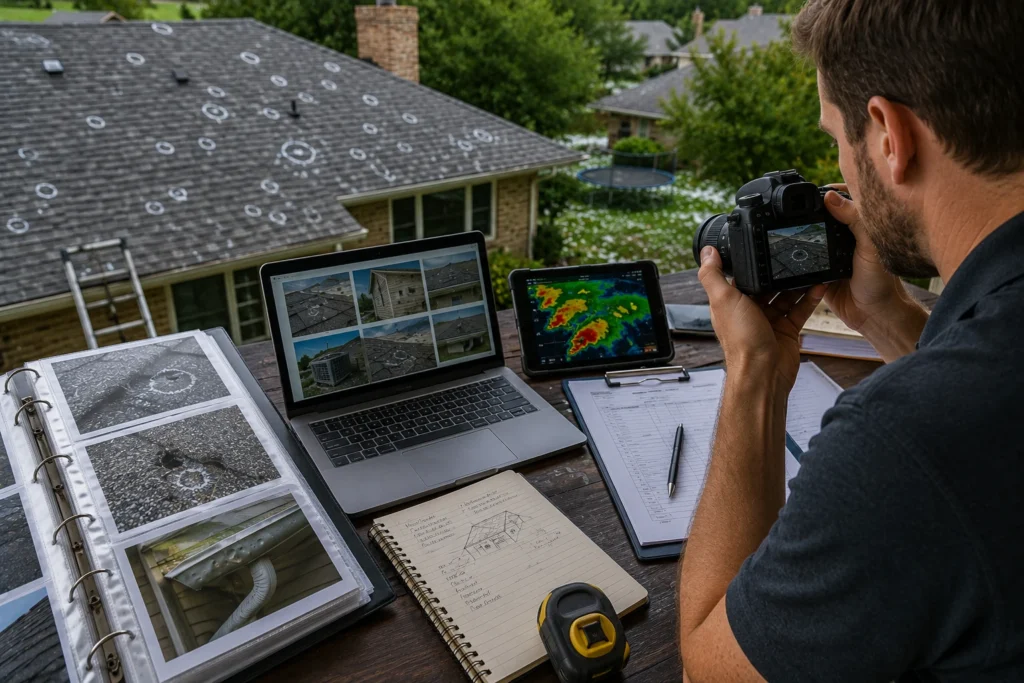
HVAC systems deserve special attention. Condenser fins can sustain impacts that reduce efficiency over time. Mechanical evaluations are sometimes necessary to determine the full extent of damage.
Interior Damage
Interior signs of hail-related issues may include:
- Ceiling stains
- Damp insulation
- Mold growth
- Attic moisture
- Paint discoloration
The sooner these issues are documented, the easier they are to connect to the original storm event.
When an Insurance Adjuster May Be Enough
Not every hail claim requires outside representation. In many cases, the insurance company’s inspection and estimate adequately address the damage. Situations where the standard process may work well include:
Minor Damage Claims
Small repair projects often involve limited complexity. When damage is straightforward and clearly documented, disputes are less likely.
Recently Installed Roofs
Newer roofing systems often make hail impacts easier to identify and evaluate.
Approved Replacement Claims
If the carrier has already agreed to replace the roof and all major components, additional representation may provide limited benefit.
No Coverage Disputes
When homeowners and insurers generally agree on the scope of repairs, claims tend to move efficiently through the process. The key is evaluating each claim individually. No two hail claims are identical.
When Hiring a Public Adjuster Makes Sense
Certain situations may justify obtaining professional assistance.
Large Hail Damage Claims
The higher the claim value, the more important thorough documentation becomes. A missing item on a major roof replacement project can significantly affect repair costs.
Denied Hail Claims
A denial does not necessarily mean damage is absent. Additional inspections may reveal information that was not previously considered.
Underpaid Claims
Some homeowners discover that contractor estimates differ substantially from insurance estimates. When that happens, additional review may be appropriate.
Complex Properties
Claims involving:
- Multiple structures
- Commercial properties
- Specialty roofing systems
- Large estates
- High-value residences
often require extensive documentation.
Reopened Claims
Sometimes new information emerges after repairs begin. A public adjuster may assist homeowners in presenting supplemental documentation when appropriate.
Understanding Claim Supplements and Why They Matter
One area where the discussion of Public Adjuster vs. Insurance Adjuster for Hail Claims in Round Rock, TX becomes especially important is the supplemental claim process. A supplement is not a new claim. Instead, it is a request to add additional covered damage or costs that were not included in the original insurance estimate. Supplements happen more often than many homeowners realize.
In fact, many disputes stem from Hail Damage Claim Supplements: What Carriers Miss in Their Scope, particularly when hidden roofing components, flashing systems, underlayment, decking damage, or ventilation issues are discovered after repairs begin. These overlooked items can significantly affect the true cost of restoring a property after a hailstorm. For example, a roof inspection may identify visible hail impacts on shingles. However, once roofing materials are removed, contractors may discover damaged flashing, deteriorated decking, compromised underlayment, or other components that require replacement.
These items may not have been visible during the initial inspection. The insurance company cannot pay for damage that has not been identified and documented. That is why supplements exist.
Insurance adjusters review supplemental requests submitted during the repair process. Public adjusters often assist homeowners by gathering photographs, contractor reports, measurements, and supporting documentation needed to justify those requests. A properly documented supplement can significantly change the scope of a claim. This does not mean every supplement is approved. However, strong documentation frequently improves the likelihood that newly discovered covered damage receives appropriate consideration. The first estimate is not always the final estimate.
Why Roof Replacement Disputes Are So Common
Roof replacement disagreements account for a large percentage of hail claim disputes throughout Texas. The reason is simple. The financial difference between repairing a few damaged shingles and replacing an entire roofing system can be substantial. Insurance companies often evaluate whether a roof remains repairable. Roofing contractors and property owners may reach a different conclusion.
Several factors influence these discussions:
- Number of damaged shingles
- Distribution of impacts
- Roof age
- Material availability
- Matching requirements
- Local building codes
- Previous repair history
In some cases, replacement materials are no longer manufactured.
Even when repairs are technically possible, matching existing materials may prove difficult. Long-term performance concerns can also influence recommendations. A repair that appears acceptable today may create future maintenance challenges if damaged components remain in service.
This is why detailed inspections are so important. Whether a homeowner works directly with the insurance company or hires representation, decisions should be supported by evidence rather than assumptions. The stronger the documentation, the stronger the position during negotiations.
A Real-World Example
Imagine two homeowners on the same street in Round Rock after a severe hailstorm. Both properties experience similar damage. Both file insurance claims. Yet the outcomes end up looking very different. The reason? Documentation. The way the claim is investigated and presented can influence how the process unfolds. In the next section, we’ll look at how two similar claims can produce very different results and what homeowners can learn from those experiences.
A Real-World Example: Same Storm, Different Outcomes
Imagine two homeowners living in the same Round Rock neighborhood. A severe hailstorm moves through the area and damages both roofs. Both homeowners carry similar insurance coverage. Both file claims within days of the storm. At first, their situations appear nearly identical. However, the claim process unfolds very differently.
Homeowner One
The first homeowner relies entirely on the initial insurance inspection. The adjuster completes the evaluation and prepares an estimate. Several roof repairs are approved. The homeowner accepts the estimate and schedules repairs. Months later, the roofing contractor discovers additional issues during construction, including damaged flashing and deteriorated underlayment that were not included in the original scope.
At that point, supplemental documentation becomes necessary. The process continues, but additional inspections and reviews are required before the newly discovered items can be considered.
Homeowner Two
The second homeowner obtains an independent inspection before making repair decisions. Additional documentation is gathered. Photographs, measurements, contractor reports, and supporting evidence are organized early in the process. The information is submitted for review. The carrier evaluates the additional documentation and updates portions of the claim. The final scope differs from the original estimate.
The Lesson
The lesson is not that one approach is always better than another. The lesson is that documentation matters. A lot. The quality of evidence often influences the quality of the claim. Homeowners who understand the process, ask questions, and maintain organized records frequently place themselves in a stronger position when disputes arise.
Common Myths About Public Adjusters
Misinformation creates confusion. Let’s address some of the most common myths homeowners hear after hailstorms.
“Hiring a Public Adjuster Will Make the Insurance Company Angry”
This is one of the most persistent misconceptions. Public adjusters are licensed professionals recognized under Texas law. Insurance companies regularly interact with public adjusters during the claims process. Their involvement is not unusual.
“Public Adjusters Delay Claims”
Not necessarily. In many cases, organized documentation actually helps streamline communication and reduce misunderstandings. The speed of a claim often depends on the complexity of the loss and the availability of supporting information.
“Only Massive Claims Need Public Adjusters”
Large claims frequently benefit from professional assistance. However, claim size is not the only factor. Complexity matters too. A smaller claim involving disputed damage can sometimes require more attention than a larger claim with clear documentation.
“Insurance Adjusters Always Find Every Damage Item”
Insurance adjusters work hard to perform accurate inspections. However, no inspection process is perfect. Roof access limitations, weather conditions, claim volume, and hidden damage can all affect findings.
“Public Adjusters Can Create Coverage”
Absolutely not. Coverage comes from the insurance policy. Public adjusters cannot create benefits that do not exist. They can only help identify and document covered damage.
Questions Homeowners Should Ask Before Choosing Representation
Whether you’re dealing directly with the insurance company or considering a public adjuster, asking the right questions is important.
Questions for Insurance Adjusters
Consider asking:
- What areas of the property were inspected?
- Were all roof slopes evaluated?
- Was the attic inspected?
- Were HVAC units examined?
- What damage was excluded?
- Are additional inspections available if new damage is discovered?
These questions help homeowners better understand the claim investigation.
Questions for Public Adjusters
Before signing any agreement, ask:
- Are you licensed in Texas?
- How long have you handled hail claims?
- What is your fee structure?
- How do you document damage?
- What experience do you have with Round Rock hail claims?
- How often do you communicate claim updates?
The answers often reveal the adjuster’s professionalism and experience level.
Texas Regulations Every Homeowner Should Know
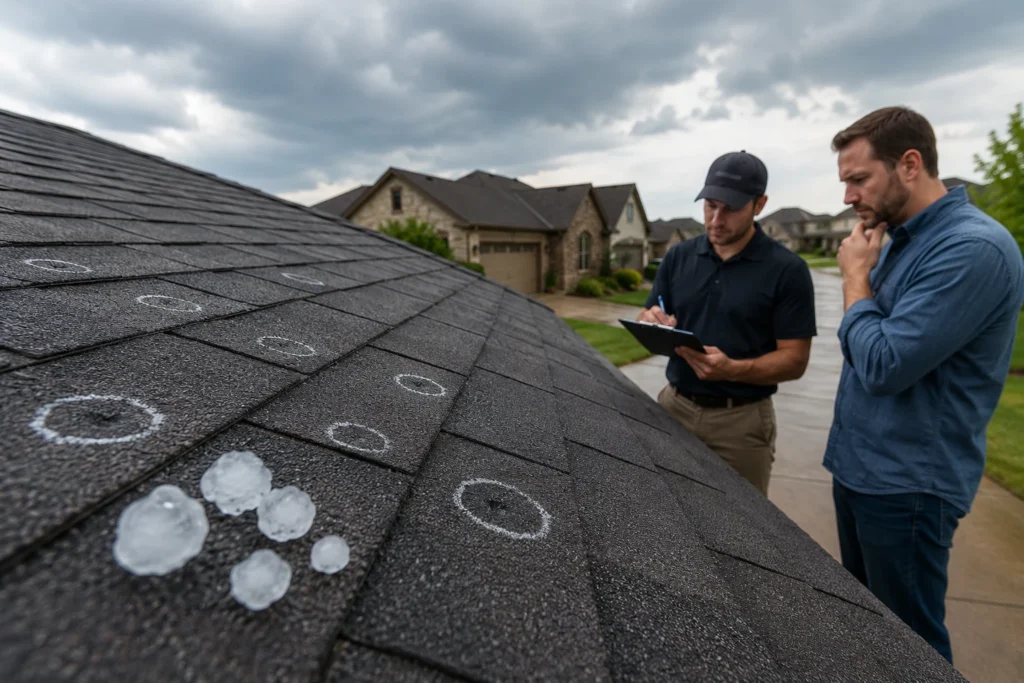
Texas maintains regulations designed to protect consumers during the claims process. Understanding those protections can help homeowners make informed decisions.
Licensing Requirements
Public adjusters must maintain proper licensing to operate legally in Texas. Before hiring anyone, verify credentials and licensing status. This simple step can prevent significant problems later.
Written Contracts
Professional services should always be documented in writing.
Homeowners should review:
- Fee structures
- Service descriptions
- Cancellation provisions
- Contract terms
Never sign a document you do not fully understand.
Ethical Restrictions
Public adjusters must comply with Texas regulations governing claim representation. Likewise, insurance adjusters must follow standards established by the insurance industry and applicable laws. Professional conduct protects everyone involved.
How to Protect Your Hail Claim From Day One
The best time to strengthen a claim is immediately after the storm. Not weeks later. Not months later. Immediately.
Document Damage Quickly
As soon as it is safe, take photographs.
Capture:
- Roof damage
- Gutters
- Downspouts
- Siding
- Fences
- Screens
- Interior staining
- HVAC equipment
The more documentation you have, the stronger your records become.
Keep Everything Organized
Create a claim file.
Store:
- Photographs
- Emails
- Estimates
- Inspection reports
- Invoices
- Weather reports
- Letters from the insurance company
Organization often becomes a major advantage during claim reviews.
Review Your Policy
Many homeowners never read their policy until a storm occurs. That creates problems.
Take time to understand:
- Deductibles
- Coverage limitations
- Exclusions
- Claim deadlines
- Reporting requirements
Knowing your policy reduces surprises later.
Obtain Independent Opinions
Contractors, roofing professionals, engineers, and public adjusters can provide valuable perspectives. Independent evaluations help homeowners understand the extent of damage before making major decisions.
Avoid Verbal-Only Communication
Whenever possible, keep important communications in writing. Emails create documentation. Phone calls do not. Written records help eliminate confusion and create a clear timeline.
Why Detailed Documentation Often Changes Outcomes
Documentation is the foundation of every successful hail claim. Without documentation, even legitimate damage can become difficult to prove.
Strong claim files often include:
- Wide-angle photographs
- Close-up damage photographs
- Date-stamped images
- Inspection reports
- Weather records
- Contractor estimates
- Material specifications
- Repair invoices
- Correspondence records
I often tell homeowners to think like investigators. Every photograph tells part of the story. Every report adds context. Every written communication contributes to the timeline. When disagreements occur, evidence becomes the deciding factor. Insurance companies make decisions based on documentation. Public adjusters negotiate using documentation. Contractors support recommendations with documentation. The homeowner who maintains organized records is usually in a stronger position than the homeowner relying on memory alone. Especially after large hailstorms affecting hundreds or thousands of properties simultaneously.
Why Round Rock Hail Claims Frequently Become Disputed
Several local factors contribute to claim disputes in Round Rock.
High Storm Activity
Frequent hail events increase claim volume and complexity. Multiple storms over time can complicate damage evaluations.
Aging Roofing Systems
Older roofs often create debates regarding wear and tear versus storm-related damage.
Construction Cost Changes
Material pricing changes quickly. Labor costs change too. These fluctuations can create disagreements regarding repair valuations.
Hidden Damage Discoveries
Many roofing systems reveal additional issues only after repairs begin. These discoveries frequently lead to supplemental requests and additional claim reviews.
Multiple Parties Involved
A typical hail claim may involve:
- Homeowners
- Insurance adjusters
- Roofing contractors
- Public adjusters
- Engineers
- Restoration companies
The more parties involved, the greater the opportunity for differing opinions. That is why communication and documentation remain so important.
Final Thoughts
Understanding Public Adjuster vs. Insurance Adjuster for Hail Claims in Round Rock, TX is about more than learning job titles. It is about understanding representation. Insurance adjusters play an essential role in the claims process. They investigate losses, review coverage, and help determine how claims are handled. Public adjusters serve a different function. They represent policyholders and help document, prepare, and negotiate claims on behalf of homeowners. Neither professional automatically guarantees a particular outcome.
What matters most is evidence. Strong documentation. Clear communication. Accurate inspections. And informed decision-making. If your property experiences hail damage in Round Rock, take the time to understand your options. Ask questions. Review estimates carefully. Keep detailed records. Seek additional opinions when appropriate.
Most importantly, do not assume the first inspection tells the entire story. Some of the most important claim information emerges later through detailed evaluations, supplemental reviews, and careful documentation. Hail damage can be complicated. Insurance claims can be even more complicated. The homeowners who achieve the best outcomes are usually the ones who stay organized, remain proactive, and rely on facts rather than assumptions. In a hail-prone community like Round Rock, that approach can make a significant difference in both the repair process and the final settlement. Because when it comes to protecting your home, preparation and documentation are often your most valuable tools.
FAQs
A public adjuster works for the policyholder, while an insurance adjuster represents the insurance company during the claims process.
Yes. A public adjuster can review the claim, gather additional documentation, and help present evidence that may support reconsideration.
No. Smaller, straightforward claims may not require one, but complex, denied, or underpaid claims often benefit from additional review.
They inspect the property, document visible damage, review policy coverage, and prepare an estimate based on their findings.
Yes. Damaged decking, underlayment, flashing, and other concealed components are sometimes found only after roofing materials are removed.
Yes. Public adjusters must hold an active Texas license and comply with state regulations governing claim representation.
Most public adjusters work on a contingency fee basis, meaning they receive a percentage of the claim settlement according to the contract.
Yes. Many homeowners hire public adjusters after receiving an estimate, denial, or settlement offer they wish to review.
Keep photographs, inspection reports, estimates, invoices, emails, letters, and any communication related to the claim.
Disputes often arise over the extent of damage, repair versus replacement decisions, pricing differences, or newly discovered damage during repairs.